
Marco Island Shelling: Today's Conditions & 7 Day Forecast
OKAY ConditionsFair shelling conditions today. Focus on the 'wrack line' (the line of debris) to find smaller treasures like Olives and Ceriths.
Analysis Notes
Upcoming Shelling Outlook - 7 Day Forecast
Plan your week by targeting the best time of day with the lowest tide.
Where to Go Shelling in Marco Island

Tigertail Beach
Requires walking around the lagoon or wading through at low tide.

South Marco Beach
Great for smaller shells and easy family access. Less walking required.

Keewaydin Island
Uninhabited barrier island and some of the best shelling in the region.

Ten Thousand Islands
Remote barrier islands south of Marco (like Kice Island). Massive shell mounds and solitude.
Common and Rare Shells of Marco Island

Lightning Whelk
Unlike most gastropods, this spiral opens on the left.

Florida Fighting Conch
Known for its brilliant orange interior and sturdy, heavy shell.

Junonia
The holy grail. Cream with brown spots. Highly prized.

Banded Tulip
Beautiful spiral patterns with distinct dark bands.

Lettered Olive
Glossy, cylindrical shell often found on sandbars.

Sand Dollar
Fragile and white when dead. Leave the fuzzy ones!

Calico Scallop
Famous for its vibrant, mottled patterns of pink, orange, and purple.

Alphabet Cone
Distinctive for its markings that look like rows of hand-written letters.

Fargo Worm Snail
Resembles spiral pasta; starts tightly coiled before growing into an irregular tube.

Florida Prickly Cockle
Heart-shaped with prickly, V-shaped ribs and a colorful pink-to-purple interior.

Coquina Clam
Tiny, wedge-shaped shells that come in a rainbow of colors and striped patterns.

Turkey Wing
Features distinctive brown and white stripes that look exactly like a wild bird wing.
The Best Shelling Tours in Marco Island


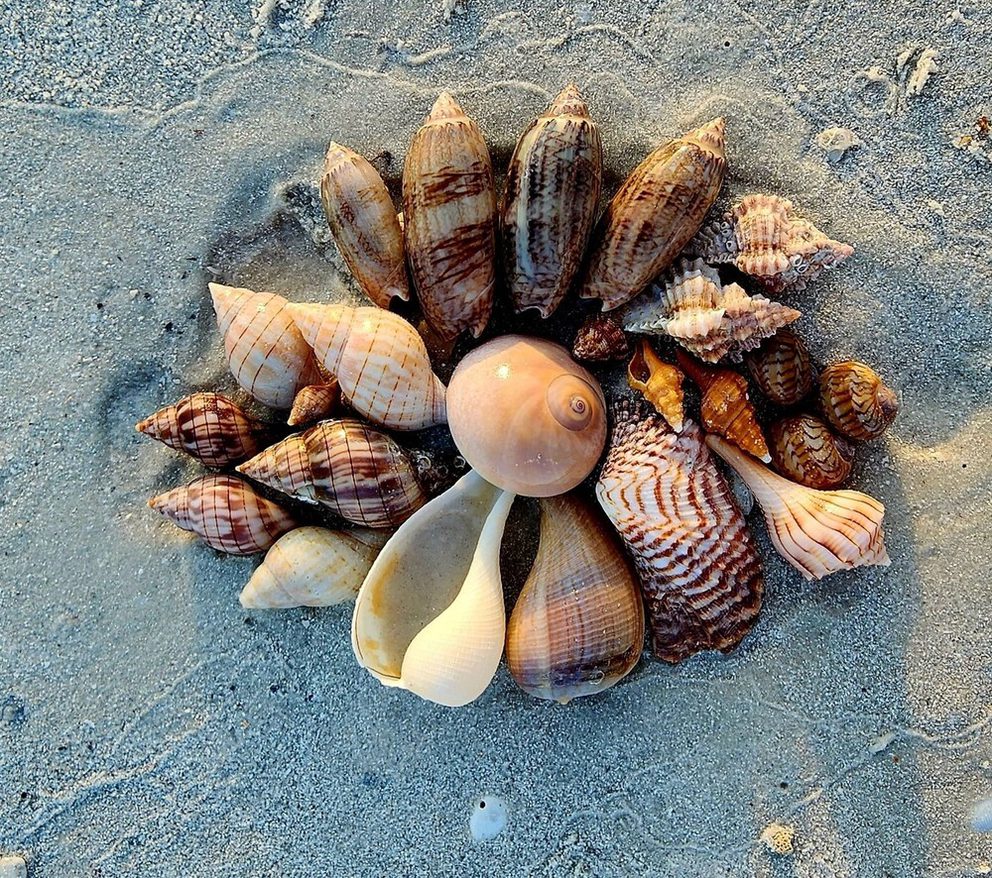


A Local's Guide to Marco Island Shelling
Marco Island is widely considered one of the best shelling destinations in North America. Located on Florida’s Gulf Coast, the island acts as a natural barrier that catches seashells drifting south along the coastline and inward from the deep Gulf. While finding common shells here is easy, finding the best treasures requires understanding the tides and exploring the remote Ten Thousand Islands directly to the south, which are world-renowned for their untouched shell beds.
1. The Golden Rule: No Live Shelling
Marco Island strictly enforces a "live shelling" ban. If a shell has a living creature inside (or a hermit crab taking up residence), you must gently put it back in the water.
- How to check: Turn the shell over. If you see a hard, leathery "door" (operculum) closing the opening, or if you feel weight/resistance, it’s alive.
- Sand Dollars: A dead sand dollar is white and smooth. A live sand dollar is brown/purple and covered in tiny, fuzzy hairs (cilia). If it’s fuzzy, let it be.
2. When to Go: Timing the Tides
Shelling is entirely dependent on the rhythm of the Gulf.
- The Golden Window: Arrive one hour before low tide and stay until one hour after.
- Negative Tides: Watch for "negative" tides (see conditions and forecast above). These pull the water back much further than usual, exposing hidden shell beds.
3. The Sheller’s Toolkit
To do this right, you need more than just your hands:
- Mesh Bags: These allow sand and water to drain out so your haul isn't heavy and messy.
- Water Shoes: Essential. Some shell beds (especially at Tigertail) are sharp, and you may need to wade through murky lagoon water.
- Long-Handled Sand Scoop: Saves your back from the constant bending over to look at shells.
- Polarized Sunglasses: These cut the glare on the water, making it much easier to spot shells submerged in the shallows.
4. What to Look For: The "Bucket List"
Marco Island is home to hundreds of species, but these are the trophies:
- The Junonia: The "Holy Grail." A cream-colored, spindle-shaped shell with brown spots. Finding one often makes the local news.
- Lightning Whelk: Unique because it is "left-handed" (the opening is on the left).
- Horse Conch: Florida’s state shell. Look for the bright orange body of the juvenile or the massive, rugged shells of the adults.
- Alphabet Cone: Smooth, white shells covered in markings that look like a secret code or hieroglyphics.
- Sand Dollars: Abundant at Tigertail, but they must be white (dead) to keep.